(Bloomberg) -- The collapse of a Baltimore bridge has threatened to disrupt commodity exports — including a significant chunk of US coal shipments — from an important East Coast port. Slumping iron ore prices are poised to plumb depths not seen since May amid weak Chinese demand. And the frantic pace of dealmaking in the oil-and-gas industry continues, with a strong start to the year.
Here are five notable charts to consider in global commodity markets as the week gets underway.
Coal
Last week's collapse of Baltimore's Francis Scott Key Bridge after being struck by a cargo ship is adding another supply-chain snag for commodities — and in particular, coal. The Port of Baltimore is the second-largest US exporting hub for the fossil fuel, accounting 28% of total shipments last year. While annual exports from the port totaled around 20 million short tons annually in three of the past five years, they surged to 28 million last year due to growing demand from Asia, according to the US Energy Information Administration. The EIA expects the temporary closure of Baltimore's port while cleanup efforts are underway will affect export volumes this year.
Iron Ore
Iron ore's hold on $100 a metric ton is looking precarious. The steelmaking material has come under sustained pressure since early this year as investors get accustomed to the depth of demand damage from China's long property crisis. While there are pockets of strength in the Chinese steel market — notably, exports and some areas of manufacturing — demand will struggle to eke out growth this year without some more decisive policy moves from Beijing. Another dip for iron ore into two digits wouldn't be a surprise, although downside is limited as these levels, which should already discourage some high-cost producers from cutting supply.
Oil-and-Gas Deals
Dealmaking in the oil-and-gas industry had its strongest start in five years, chalking up more than $84 billion in announced mergers and acquisitions, according to data compiled by Bloomberg. Top deals included Diamondback Energy Inc.'s deal in February for Permian Basin driller Endeavor Energy Resources LP and EQT Corp.'s takeover of Equitrans Midstream Corp. It comes after US oil and gas producers inked a flurry of deals late last year, including Exxon Mobil Corp.'s massive $68-billion deal for Pioneer Natural Resources Co. in October, as energy firms look to line up new places to drill.
Corn
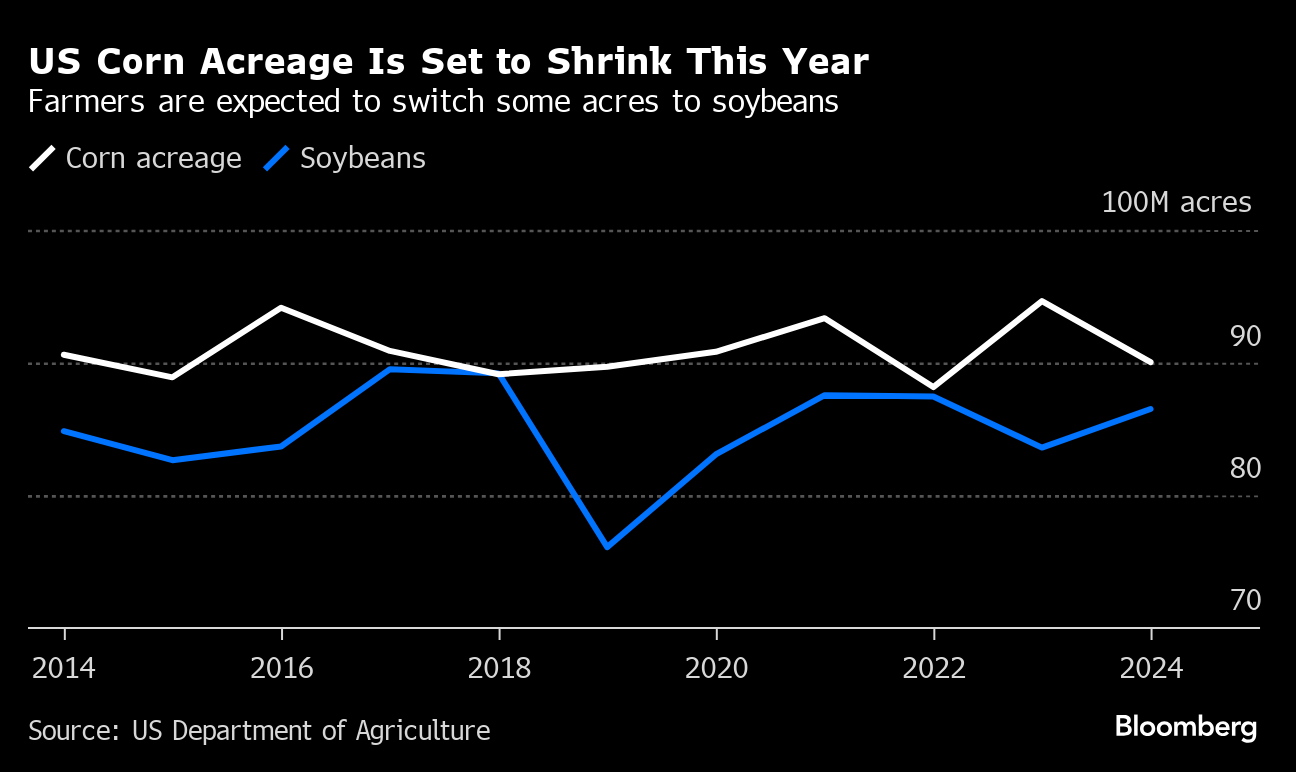
US farmers will plant 5% less corn this year as they switch part of their acreage to higher-priced soybeans, according to a US Department of Agriculture report based on a survey of growers. The reduction in corn acres comes as prices for the grain that has dominated American agriculture for over a century faces downward pressure amid ample global supplies and sluggish demand for US exports. Soybeans, meanwhile, have emerged as a more attractive alternative amid booming demand for the crop's oil, a key ingredient for renewable diesel production.
Hurricane Season
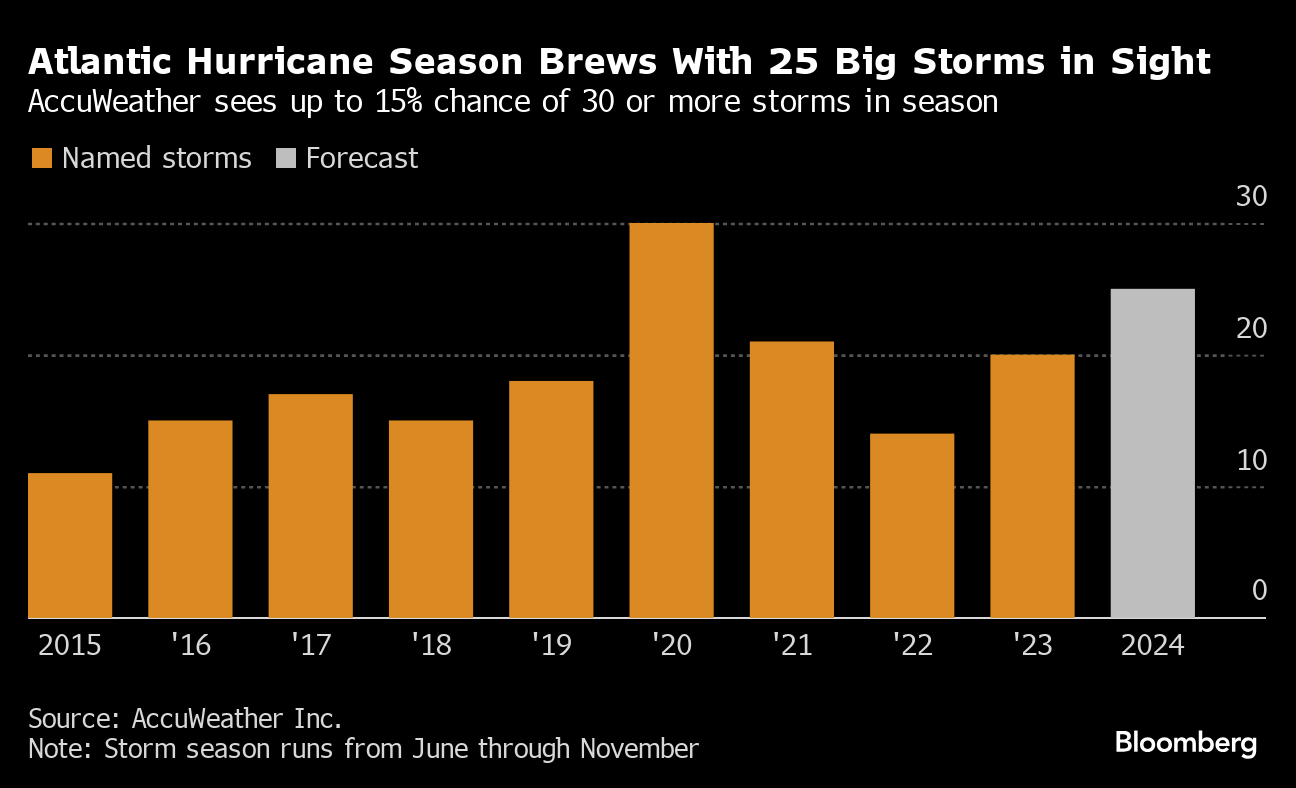
A supercharged hurricane season expected in the Atlantic spells bad news for commodities. AccuWeather Inc. is predicting an explosive season ahead, with as many as 25 named storms forming from June through November — well above a typical year. Much of America's oil and natural gas production and export infrastructure are in the Gulf of Mexico and Texas, often falling in the past of such devastating storms. Even weak tropical storms have been known to knock out as much as 30% of offshore production for days at a time. The storms can also threaten major agricultural crops in the southern US, including citrus groves in Florida and cotton fields in Texas, the top producing US state.
--With assistance from Brian K. Sullivan.
More stories like this are available on bloomberg.com
©2024 Bloomberg L.P.
Essential Business Intelligence, Continuous LIVE TV, Sharp Market Insights, Practical Personal Finance Advice and Latest Stories — On NDTV Profit.