

No More 10-Minute Delivery: Government Asks Blinkit, Zomato, Delivery To Drop Delivery Time Limit
The Labour Ministry directive came after gig workers strike in December to demand better payouts and improved working conditions.



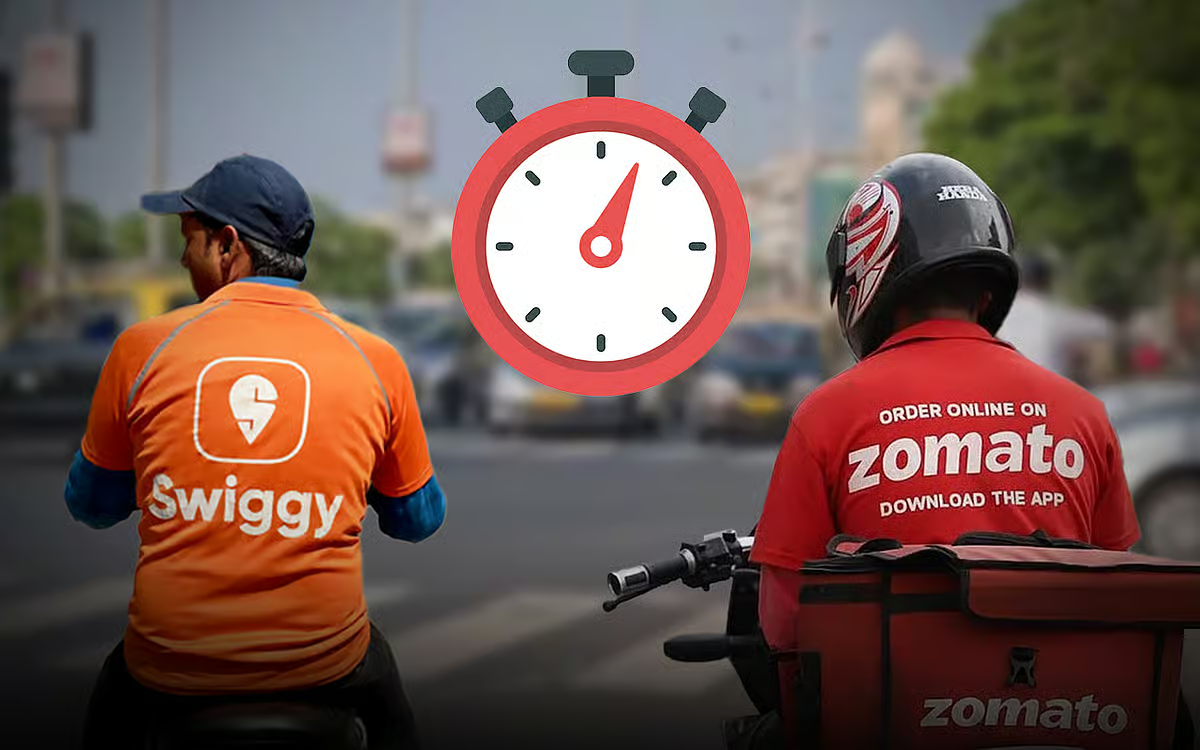
The Labour ministry on Tuesday has directed quick-commerce companies like Zomato, Swiggy, Blinkit and Zepto to remove the 10-minute delivery time limit.
Union Labour Minister Mansukh Mandaviya met representatives of these platforms and told them to prioritise the safety of delivery partners, reported NDTV.
According to news agency ANI, Blinkit has already acted on the directive and removed the 10-minute delivery promise from its branding. Other aggregators are expected to follow suit in the coming days. The move is aimed at ensuring greater safety, security and improved working conditions for gig workers.
The Labour Ministry directive came after gig workers strike in December to demand better payouts and improved working conditions. The Gig and Platform Service Workers Union went on a strike on Dec 31, to collectively raise demands concerning the rights, welfare, and dignity of gig and platform workers across India.
90-Day Annual Work Threshhold Proposed
Earlier this month, the Labour Ministry had proposed a 90-day annual work threshold as the mandatory eligibility criteria for gig and platform workers to access social security under new draft rules on the Social Security Code 2020, published on Dec 31.
It explained that a gig worker, or a platform worker, will be considered to be engaged with an aggregator for one day if they have earned income, irrespective of the amount, for such work rendered with the aggregator on that calendar day.
In case of working with multiple aggregators, the days of engagement of a gig worker or a platform worker shall be calculated across the aggregators in a cumulative manner, it added.
If a gig worker, or a platform worker, is engaged with three aggregators on a particular calendar day, this shall count as three days, the Ministry of Labour and Employment said.
It also clarified that an eligible gig worker or a platform worker shall include all such workers engaged by the aggregator directly or through an associate company, holding company, subsidiary company, limited liability partnership or through a third party.