Coronavirus Crisis: World's Second Oldest Airline Driven To Bankruptcy
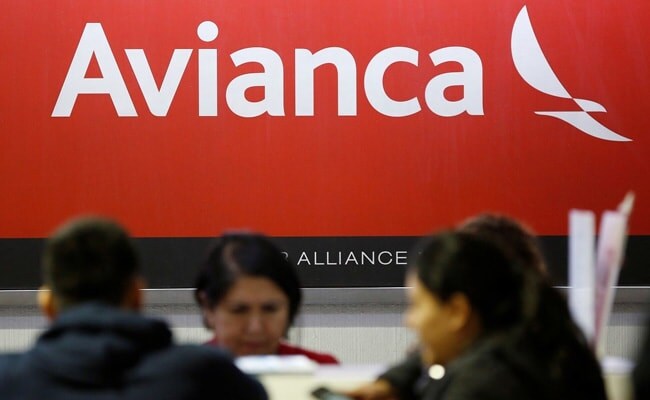
Avianca Holdings, Latin America's second largest airline, filed for bankruptcy on Sunday, after failing to meet a bond payment deadline, while its pleas for coronavirus aid from Colombia's government have so far been unsuccessful.
If it fails to come out of bankruptcy, Bogota-based Avianca would be one of the first major carriers worldwide to go under as a result of the pandemic, which has crippled world travel.
Avianca has not flown a regularly scheduled passenger flight since late March and most of its 20,000 employees have gone without pay through the crisis.
"Avianca is facing the most challenging crisis in our 100-year history," Avianca chief executive Anko van der Werff said in a news release.
While Avianca was already weak before the coronavirus outbreak, its bankruptcy filing highlights the challenges for airlines that cannot count on state rescues or on such rescues coming fast enough. Avianca is still hoping for a government bailout.
"This isn't a surprise at all," said Juan David Ballen, chief economist at Casa de Bolsa brokerage in Bogota. "The company was heavily indebted despite the fact it tried to restructure its debt last year."
Avianca, the second oldest continually operating airline in the world after KLM, had $7.3 billion in debts in 2019. The airline filed for Chapter 11 bankruptcy in New York and said it would continue operations while it restructured its debts.
The Colombian Association of Civil Aviators (ACDAC), a union representing many Avianca employees, said it supported the move.
Avianca already went through bankruptcy in the early 2000s, from which it was rescued by a Bolivian-born oil businessman, German Efromovich.
Mr Efromovich grew Avianca aggressively but also saddled the carrier with significant debt until he was ousted from the airline last year in a boardroom coup led by United Airlines Holdings Inc. He still owns a majority stake in the carrier.
United stands to lose up to $700 million in loans related to Avianca.
Mr Efromovich told news agency Reuters on Sunday that he disagreed with the decision to file for bankruptcy and that he was not involved in making it.
Lead-Up to Bankruptcy
The management that took over after Mr Efromovich's ousting was already focused on a cost-cutting reorganization dubbed "Avianca 2021" before this year's crisis.
Warnings about its fragile finances abounded. Roberto Kriete, president of Avianca's board, said last year in a meeting with employees that the airline was "broke."
Last month, Avianca's accounting firm, KPMG, said it had "substantial doubts" about the carrier's ability to exist a year from now.
Avianca's shares closed at 88 cents on Friday in New York, from a high of more than $18 in 2014.
Most pressingly, Avianca was facing a $65 million bond payment due on Sunday that analysts did not think the airline was in a position to meet. S&P downgraded the airline to "CCC-" status in the days leading up to that payment.
Airline executives confirmed in a press call on Sunday night that they had not made the payment.
Mr Van der Werff had mounted a public relations campaign in recent weeks to secure emergency aid from Colombia's government, but none had materialized as of Sunday.
Avianca has no certain date to resume operations, as its main hubs - Colombia, El Salvador and Peru - have all shut down air traffic to fight the coronavirus. The carrier faced backlash after it sold plane tickets for late May only to have to cancel them when Colombia extended its coronavirus lockdown.
Avianca will also shut down its operations in Peru, which represents 5% of the airline's revenue, and will lay off hundreds of employees within the next 10 days.
"In this time, we do not have liquidity to sustain a loss-making operation," Silvia Mosquera, Avianca's chief commercial officer, told reporters regarding Avianca Peru.
Colombia's Avianca is the third of Mr Efromovich's airlines to go through bankruptcy or out of business in recent years. Airlines Avianca Brasil and Avianca Argentina ceased to exist last year because of economic troubles in their markets.

-
We May Need Another Tukaram Mundhe To Fight Air Pollution | The Reason Why

Developers may install basic measures such as sprinklers and green nets, resume work, and continue violating rules when this equipment stops working.
-
Extracting Value From Battery Scrap Could Be Challenging For India | The Reason Why
A discarded lithium-ion battery still contains valuable materials such as lithium, nickel and cobalt. These can be recovered and reused. When such batteries are crushed and shredded, they produce a dark powder called black mass.
-
One El Nino, India Can Handle. Two Could Break The Granary
India's grain stocks can absorb one bad year, but a second El Nino could drain the buffer in two to three years, economists say.
-
India's Troika Of Good Luck | Joining The Dots
As Jensen Huang's exit drags Nvidia down, a cooling AI trade and resilient earnings have revived investor interest in India. A likely RBI rate hike looms.
-
Talking Points This Week: Leadership Shock At Nvidia, Earnings Strength, And The Fog Over Hormuz
The Anthropic IPO pricing and first trading day, Nvidia's upcoming earnings, and any fresh signals from Iran will set the tone for the following week.
-
Signature Play: The Classic Cocktail Is Dead. Or Is It?
Classic cocktails are disappearing from India's cocktail menus. But they're still being ordered, taught to bartenders and borrowed from. So, who's really having the last drink?
-
A New Samvat Wishlist: Inclusive Prosperity And Human Development
India has strengthened its economic foundations through infrastructure, digital access and enterprise. Its next growth chapter must deepen productivity, create better livelihoods and widen participation in prosperity.
-
Love, Sex Aur Dhokha: The Audacious Plot To Spy On Jensen Huang
A Taipei dinner, a Singapore chip buyer and a suspected Chinese asset: inside the alleged spy operation that got close to NVIDIA's Jensen Huang.
-
Ten Things I Learnt This Samvat
Patience can be a trap. Cheap stocks can stay cheap. Leverage can wipe you out. What did Samvat 2082 teach us? Niraj Shah writes on 10 lessons from the year gone by.
-
Talking Points This Week: Tech Nerves, FII Buying, And A Faraway Banking Shock
The global markets are not shining this Diwali. The exception in the large markets is, India.









