(Bloomberg) -- Investors are questioning whether the US government's hastily assembled weekend rescue plan for the banking system will prevent more fallout from the collapse of SVB Financial Group's Silicon Valley Bank.
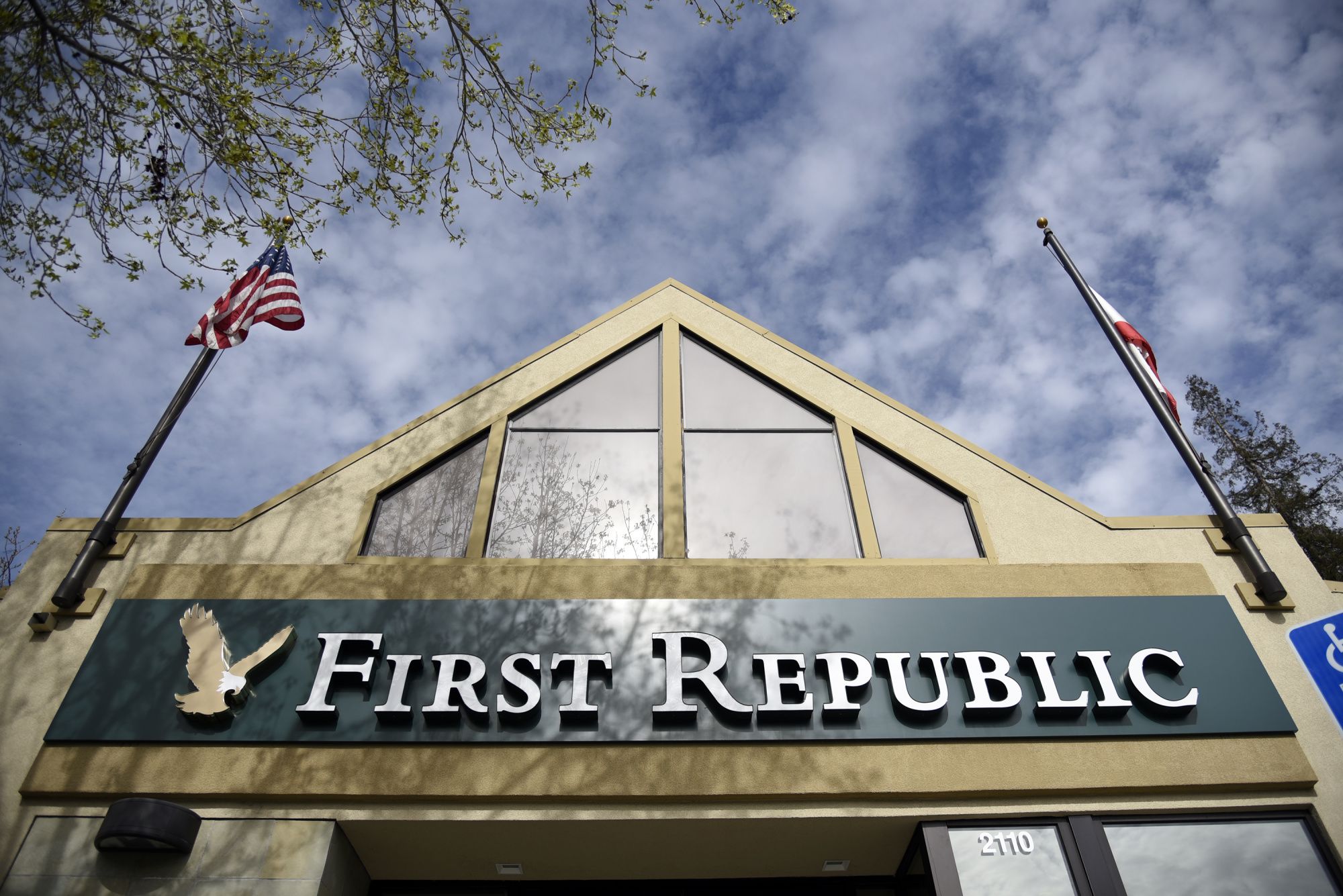
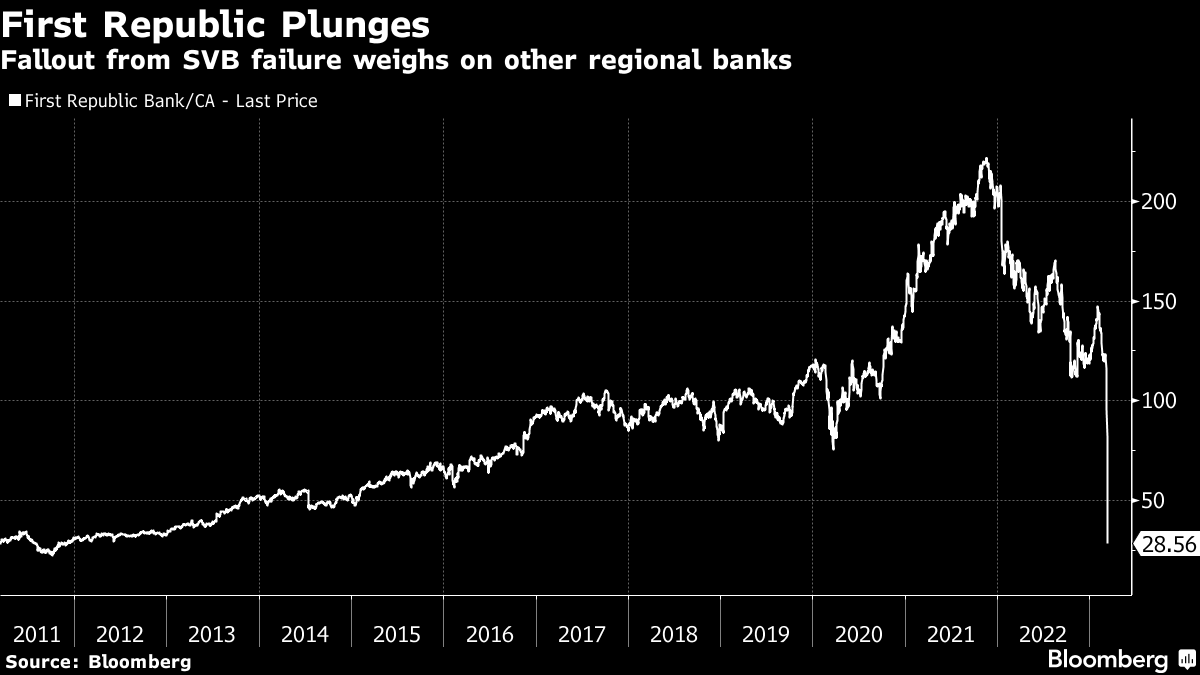
US bank stocks slid, including those of San Francisco-based First Republic Bank, which tried to reassure investors with a statement about the strength of its liquidity. The company's shares plunged a record 65% in New York. Among other regional banks, Phoenix-based Western Alliance Bancorp slumped 75%, and Beverly Hills, California-based PacWest Bancorp slid 35%.
Read more: Ackman Says More Banks Will Likely Fail Despite Fed Intervention
Major lenders also took a hit. Wells Fargo & Co. was down 4.2%, Citigroup Inc. slipped 4.4% and Bank of America Corp. declined 6.4%.
The Federal Reserve, Federal Deposit Insurance Corp. and Treasury Department said Sunday they would create a funding program to make loans to banks, and the central bank relaxed terms for lending through its discount window. Officials said depositors of Santa Clara, California-based SVB would have access to all of their money, whether insured by the FDIC or not.
While depositors won relief, SVB shareholders and certain unsecured debtholders won't be protected under the agreement — a move by regulators that could apply to other banks that run aground.
The government's containment measures don't solve a key problem that helped bring down SVB and that some other banks still face: a mismatch in duration between assets and liabilities. Adding to the concern for shareholders is the government's inability so far to find a buyer for SVB. The bank's parent, SVB Financial Group, said it's exploring strategic alternatives for its investment-banking division as well as its venture capital and private credit fund platform.
“We believe systemic risk is lower with the Fed/FDIC/Treasury backstop, but the operating environment is set to become much tougher for banks,” Truist Securities analyst Brandon King said in a note to clients. “Regional and community banks are facing structurally lower profitability levels going forward.”
First Republic said in a statement late Sunday that it had more than $70 billion in unused liquidity to fund operations from agreements that included the Fed and JPMorgan Chase & Co. More liquidity is available through the Fed's new lending facility, according to First Republic.
Charles-Henry Monchau, chief investment officer at Syz Group, cited a raft of problems contributing to First Republic's share declines. Roughly 68% of First Republic's deposit base was uninsured as of Dec. 31. In addition, like SVB and Signature Bank, which New York regulators closed Sunday, First Republic is “very big” in banking venture capital and private equity businesses, Monchau said.
In taking receivership of Signature Bank, federal officials offered its depositors protections similar to those extended to SVB. The surprise announcement reminded investors that further turmoil, at least among regional banks, was still possible. Indeed, a senior US Treasury official said some institutions had issues similar to the failed Silicon Valley Bank.
The industry is facing higher funding expenses, a ramped-up cost of capital and eventually more consolidation, according to Morgan Stanley analyst Betsy Graseck.
“We do not believe there is a liquidity crunch facing the banking industry,” she said in a research note.
--With assistance from and .
(Updates share prices starting in second paragraph.)
More stories like this are available on bloomberg.com
©2023 Bloomberg L.P.
Essential Business Intelligence, Continuous LIVE TV, Sharp Market Insights, Practical Personal Finance Advice and Latest Stories — On NDTV Profit.