Global Uncertainty Is Structural, Not Temporary: FM Sitharaman
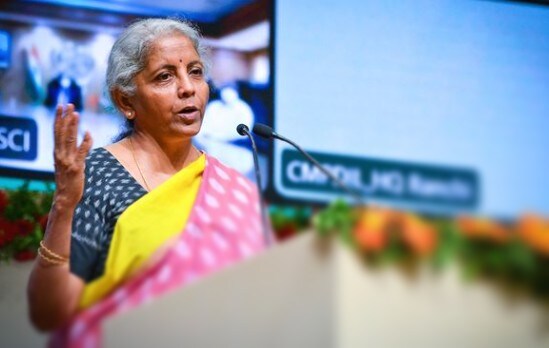
Finance Minister Nirmala Sitharaman on Friday said the world is undergoing a structural transformation, not a temporary disruption, as she addressed the 4th Kautilya Economic Conclave 2025. She said that the foundation of the global order is shifting rapidly, with traditional rules of international engagement being rewritten.
“We are in an era of unprecedented global uncertainty,” Sitharaman said, adding that the expansion of globalisation now appears to be a relic of the past. She noted that shifts which once took decades are now unfolding within weeks, leaving policymakers grappling with volatility and diminished confidence in continuity.
The minister stressed that India's rise as a stabilising force is neither accidental nor transient. With a steady share of consumption and investment, she said India's growth is anchored in domestic factors, supported by improved capital expenditure and controlled inflationary pressures.
On trade and energy, Sitharaman highlighted the acute trade-offs faced by developing economies, especially in a world trending toward decoupling. She pointed out that trade imbalances have hollowed out some nations, while energy dependencies have made others vulnerable to costly imports.
Calling for reform of multilateral institutions, she said they must reflect today's realities rather than outdated frameworks. “Problems exist, and we'll have to find solutions. A new equilibrium must be decided,” she said.
Sitharaman also emphasised that self-reliance is key to achieving the 2047 Viksit Bharat goal, but clarified that it does not mean shutting the economy. Reaching 8% GDP growth will be crucial to gaining momentum toward that vision, she added.
The minister acknowledged that India's strategic independence comes at the cost of consistent performance, and said the country must remain open to possibilities that were previously unconsidered. “Fragmentation may result in unforeseen cooperation,” she said, urging India to be an active participant in shaping the new global order while preserving its autonomy.

-
Talking Points This Week: Tech Nerves, FII Buying, And A Faraway Banking Shock

The global markets are not shining this Diwali. The exception in the large markets is, India.
-
Midterm Rally Lasted A Day. The Hard Reality Of A Divided US May Last Two Years | Opinion
Between a contested AI boom, a debt ceiling that arrives in 2027 and a president with every incentive to act alone, the next two years may prove more volatile than the first day's rally suggests.
-
Blue Wave Will Derail the AI Trade but Won't Dismantle the AI Era | Unhedged Position
The Democrats' sweep of the US Congress will see politics collide with economic forces both over the long and short term.
-
It's Time To Take The GST Council's Bet On Trust Global
Payment records can prove India's services exports, and clear, proportionate rules can bring foreign digital sellers into the tax net.
-
Opinion | India at 38: From Innovation Overperformer to Innovation Powerhouse
India now has 453 VC-backed deep science startups, 18 of them late-stage, after 117 percent growth since 2020. Laurus Labs, at USD 9.3 billion, is the most valuable deep science company in any middle-income economy outside China.
-
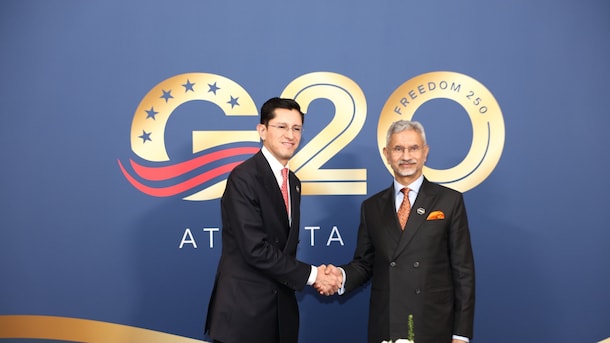
Navigating Energy Crossroads: S Jaishankar's Call For Diversified Supply Chains At G20 Ministerial Meeting
As geopolitical fault lines continue to test maritime trade routes and commodity flows, Jaishankar's message remains pertinent: true economic resilience requires open markets, protected transit lines, and a genuine commitment to multilateral cooperation rather than coercion.
-
Indians Are Travelling, But Not Every Journey Is A Holiday | The Week In Whys
Pilgrims, patients and working women are the real travellers, and the system hasn't quite caught up with them.
-
Getting To Work Costs Women More | The Reason Why
It is not just about women paying more than men. It is about women paying much more in cities than in villages.
-
AI Bias In Investing Cannot Be Eliminated, But It Can Be Governed
Framing is a particularly important example as identical financial information presented in terms of gains rather than losses can lead an LLM to reach a different assessment.