RBI pressures banks to trade bond futures: report
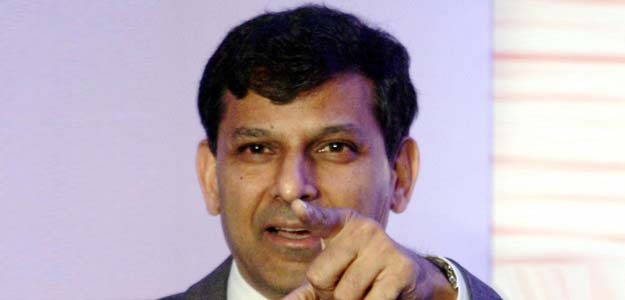
Determined to turn its third attempt at launching bond futures into a success, the Reserve Bank of India (RBI) is pressuring state-owned banks to trade the derivatives that provide hedges against the country's volatile interest rates, banking sources told Reuters.
Interest rate futures allow market participants to bet on the direction of bond yields.
Developing such a market is a key part of RBI Governor Raghuram Rajan's push to deepen markets, by providing hedging tools commonly found in more developed economies.
India has long struggled to introduce these types of derivatives because of what traders say has been poor design. That has contributed to the migration of rupee-based derivatives trading to offshore financial centres such as Singapore.
Eager for a successful launch, RBI officials are making frequent phone calls to lenders encouraging them to trade, most overtly during a meeting held before the launch, according to several senior bankers who are in touch with the central bank.
Banks were told Rajan himself would be monitoring which banks were placing orders, scrutinising information in management information systems (MIS) or trading records, the sources said.
"RBI actually called people and threatened people saying that these MIS will go to governor, and the volumes and participation," said a chief dealer with a state-owned bank.
"We have to close our eyes and ears and mouths and use this product," he added.
Bond futures started trading on the Multi Commodity Exchange of India on January 20, with the bigger National Stock Exchange launching trading a day later.
A spokeswoman said RBI was not immediately available to comment.
The pressure has so far failed to spark a rise in traded futures volumes.
Yet traders said the futures are well designed since they allow trades to be settled in cash and are pegged to benchmark 10-year yields, the two requirements traders had demanded.
National Stock Exchange data shows bond futures volumes over the previous five sessions averaged Rs 337 crore, compared with Rs 24,280 crore in government bonds and Rs 1.1 lakh crore in equity futures.
Traders said activity was slow owing to a broad decline in volumes across debt markets due to uncertainty sparked by a selloff in emerging markets and general elections due by May.
Traders also said not all banks have set up compliance systems or cleared internal approvals yet to trade bond futures.
FAILURE TO LAUNCH
RBI officials have continued to call state-run banks, asking why they are not placing orders, according to traders who have received the phone calls.
Describing one such call, a trader at a state-owned lender quoted a central bank official as saying: "It's an acceptable product, why are you not trading?"
The trader said the bank had to commit to trading in the futures market, despite being uncomfortable with the lack of depth and liquidity.
"What else can we say?" the trader told Reuters. "Who is going to say no to RBI?"
The pressure was more direct before the launch of the futures when, during a meeting of senior traders at state-owned lenders with RBI officials, banks were told that Rajan would be monitoring the trades.
According to one banker at the meeting, he was told by a central bank official that bond futures were "a pet project" for Rajan and "close to his heart."
The RBI is known for its behind-the-scenes intervention in markets, typically when defending the rupee, an example being last July when it phoned trading desks with explicit messages to cut speculative positions in the currency.
Since taking the helm of the central bank in early September, Rajan has been keen to put an end to India's poor track record at introducing new market products: its last major success was the 2008 launch of currency futures.
Failed attempts include two previous attempts at launching bond futures in 2003 and 2009, which traders say were poorly designed because of a cumbersome requirement to actually deliver government debt when settling the futures contracts.
The lack of sophisticated domestic products, along with restrictions on domestic markets and higher taxes, are the reason trading of rupee derivatives has shifted to financial centres such as London.
In equities, 65.5 per cent of total outstanding futures positions on India's NSE index are based in Singapore.
Still, analysts expect trading in bond futures will pick up eventually anyway in a country where supply-side pressures - including a poor network of roads - keep food prices high, making inflation and interest rates volatile.
Under Rajan, the RBI has stunned investors by raising the country's key lending rate, the repo rate, by three-quarters of a percentage point in five months.
Bond futures are thus expected to provide a critical hedging tool, alongside a more developed market for betting on interest rates via swaps, while also providing arbitrage opportunities for banks.
"The current version of interest rate futures is far better than the previous two and provides for a good hedging tool," said Kush Sonigara, an analyst at financial services firm MyCapital Solutions.
"Strategic investors and public sector units for now are cautious. However, as time goes by, active participation from them is likely."
Copyright Thomson Reuters 2014

-
A New Samvat Wishlist: Inclusive Prosperity And Human Development

India has strengthened its economic foundations through infrastructure, digital access and enterprise. Its next growth chapter must deepen productivity, create better livelihoods and widen participation in prosperity.
-
Love, Sex Aur Dhokha: The Audacious Plot To Spy On Jensen Huang
A Taipei dinner, a Singapore chip buyer and a suspected Chinese asset: inside the alleged spy operation that got close to NVIDIA's Jensen Huang.
-
Ten Things I Learnt This Samvat
Patience can be a trap. Cheap stocks can stay cheap. Leverage can wipe you out. What did Samvat 2082 teach us? Niraj Shah writes on 10 lessons from the year gone by.
-
Talking Points This Week: Tech Nerves, FII Buying, And A Faraway Banking Shock
The global markets are not shining this Diwali. The exception in the large markets is, India.
-
Midterm Rally Lasted A Day. The Hard Reality Of A Divided US May Last Two Years | Opinion
Between a contested AI boom, a debt ceiling that arrives in 2027 and a president with every incentive to act alone, the next two years may prove more volatile than the first day's rally suggests.
-
Blue Wave Will Derail the AI Trade but Won't Dismantle the AI Era | Unhedged Position
The Democrats' sweep of the US Congress will see politics collide with economic forces both over the long and short term.
-
It's Time To Take The GST Council's Bet On Trust Global
Payment records can prove India's services exports, and clear, proportionate rules can bring foreign digital sellers into the tax net.
-
Opinion | India at 38: From Innovation Overperformer to Innovation Powerhouse
India now has 453 VC-backed deep science startups, 18 of them late-stage, after 117 percent growth since 2020. Laurus Labs, at USD 9.3 billion, is the most valuable deep science company in any middle-income economy outside China.
-
Navigating Energy Crossroads: S Jaishankar's Call For Diversified Supply Chains At G20 Ministerial Meeting
As geopolitical fault lines continue to test maritime trade routes and commodity flows, Jaishankar's message remains pertinent: true economic resilience requires open markets, protected transit lines, and a genuine commitment to multilateral cooperation rather than coercion.